
Bee Who You Are: A SOGIESC Review
Bee who you are (for your pride!) A review on queer language, the SOGIESC framework, and why labels (or the lack thereof) matter
Content warning: This article may contain concepts and terminologies that are new to children. Parental discretion is advised for minors.
Let’s get one thing straight: SOGIESC isn’t something that was made up. It’s an evolution of international human rights scholarship and activism during the late 20th century, aiming to provide a full spectrum of human sexuality and gender. There is no single proponent of the framework, nor should it be credited to an exclusive group of people. SOGIESC has always existed alongside human beings, as it deals with aspects that are inherent to our humanity— a sense of identity, self-expression, feelings of attraction, and even anatomy. People just didn’t have the terminology or labels to put it all in perspective back then.
So language stepped up to voice certain truths that the world refused to acknowledge. In the book “Vita Sexualis: Karl Ulrichs and the Origins of Sexual Science,” 19th-century German lawyer and writer Karl Heinrich Ulrichs, (who may have identified as gay) attempted to put the experience of men who were attracted to their fellow men into words. The National Geographic noted that as early as 1862, he used the term “urning” to refer to men who were attracted to men: “We Urnings constitute a special class of human gender. We are our own gender, a third sex.”
What followed in the same era was the presentation of terminologies such as homosexual and bisexual. An archive by BBC wrote that it was Hungarian journalist Karl Maria Kertbeny who coined the term homosexual to describe sexual experiences, alongside heterosexual, and two now forgotten terms to describe masturbation and bestiality: monosexual and heterogenit. But even then, homophobia (which they didn’t have the word for at the time) existed. The Prussian government contemplated adding language that forbade male same-gender sexual activity to its constitution, to which Kertbeny replied to via an anonymous letter that called the move a “shocking nonsense.” The letter is mentioned in “We are Everywhere: A Historical Sourcebook of Gay and Lesbian Politics,” highlighting how Kertbeny emphasized same-gender attraction as something that is natural to the human experience.
Over the years, SOGIESC evolved as a means of understanding a person’s entire being—from the way one experiences attraction (sexual orientation), to how they see and present themselves (gender identity and expression). SC (sex characteristics) was later added to protect intersex individuals from non-consensual medical interventions. It’s important to note that while these aspects coexist, they work independently. Who you are attracted to does not dictate how you see or present yourself and vice versa.
S plus O stands for Sexual Orientation
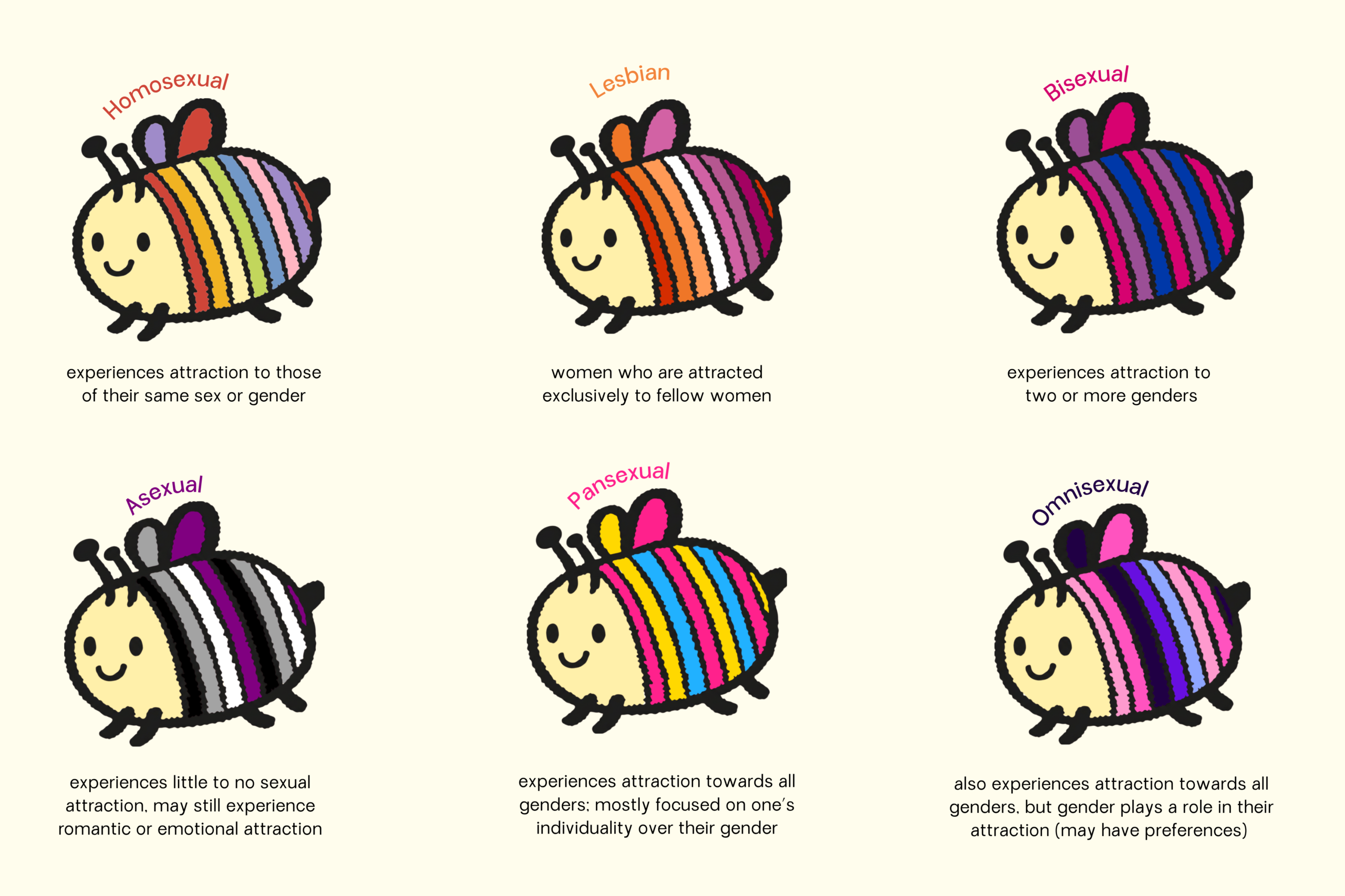
Sexual Orientation in SOGIESC refers to a person’s emotional, romantic, or sexual attraction towards other people. It’s the feeling factor in the SOGIESC framework. Initially, SO was tackled in three main categories: heterosexual, homosexual, and bisexual.
Heterosexual – experiences emotional, romantic, or sexual attraction to people of the opposite sex
Homosexual – experiences emotional, romantic, or sexual attraction to people of the same sex
Bisexual – experiences emotional, romantic, or sexual attraction to both traditional sexes: men and women
But the lack of one’s emotional, romantic, or sexual attraction constitutes recognition too. Simply because it exists, too. Queer History attributes the term asexuality to German sexologist Emma Trosse. Records suggest that Trosse actually came out as asensual, writing: “Verfasser hat den Mut, sich zu jener Kategorie zu bekennen (The author has the courage to admit to this category).” Therefore,,,
Asexual – having little to no sexual attraction, may or may not be aromantic
Aromantic – having little to no romantic attraction, may or may not be asexual
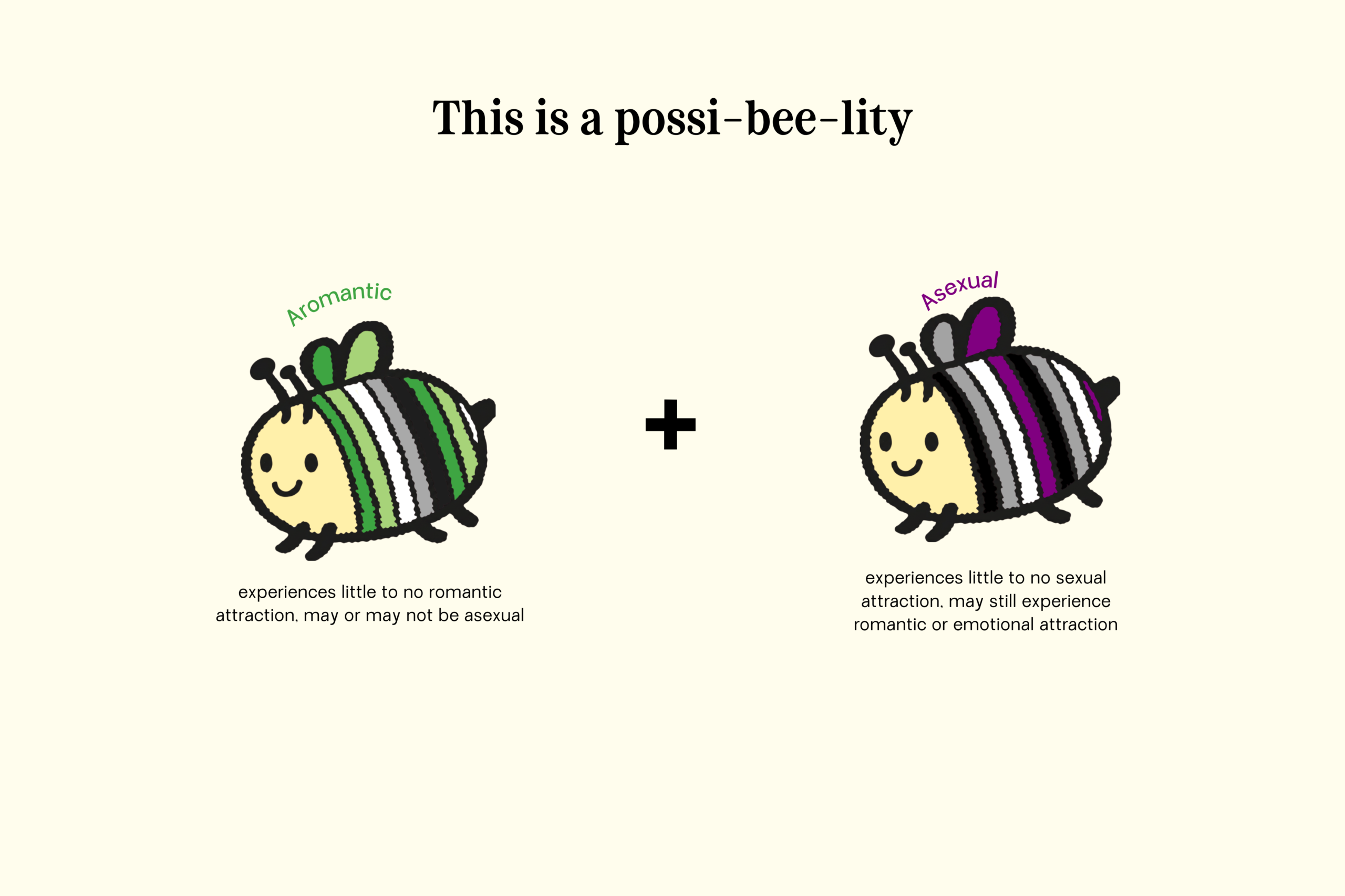
A person can be both aromantic and asexual, in varying levels. Somebody could experience less romantic attraction than most people and have no sexual attraction at all. Somebody could be in a romantic relationship and opt not to have physical intimacy. 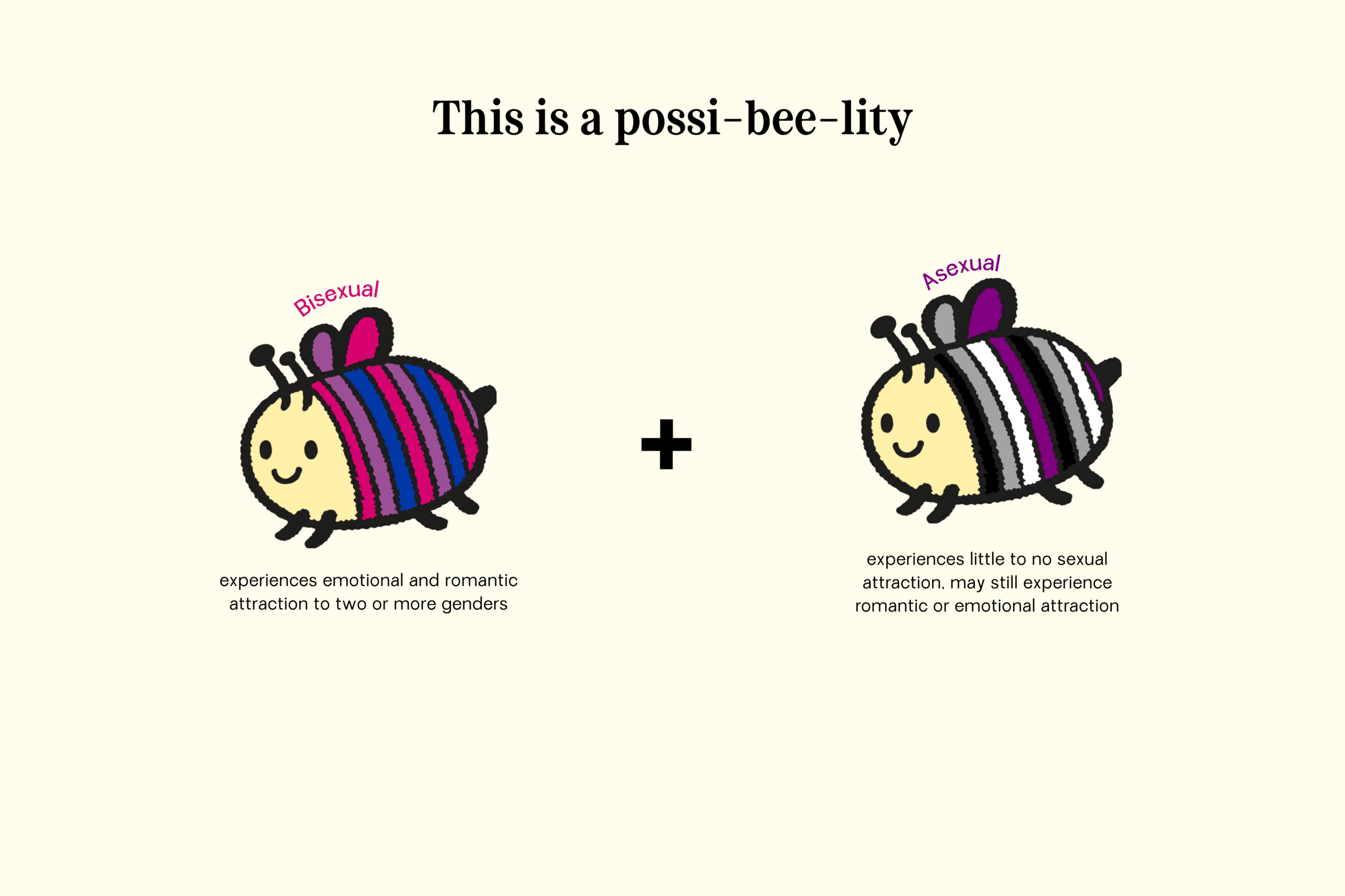
A personal can experience romantic attraction towards both men and women (often called biromantic), then have less to no interest in physical intimacy with their partner.
Gay and lesbian emerged as specific terminologies for men who are attracted to men and women who are attracted to women, respectively. Gay was reclaimed by 1960s activists as a decade-old slur, while lesbian traces back to the ancient Greek poet, Sappho (get it, “sapphic“?) of Lesbos. The University of California, Santa Barbara wrote that her poems were “not only self-reflective” but were testaments to her attraction towards fellow female students attending the school she conducted on the island of Lesbos. At present, Gay and Lesbian are used as identifiers under Sexual Orientation and form part of the LGBTQIA+ (Lesbian, Gay, Bisexual, Transgender, Intersex, Asexual/Aromantic/Agender) movement.
Sexual orientations such as pansexual and omnisexual came later, with both dealing with attraction towards all genders. The main difference is that pansexuals often experience attraction regardless of a person’s gender, often looking into one’s individuality over their gender. Omnisexuals, on the other hand, are more specific, as gender often plays a role in their attraction, and they may have preferences. Seattle Pride created a quick timeline on the term pansexuality, beginning with its first mention in 1914. Omnisexual arrived years after, with queer records saying it was described in the context of the current definition in “Sexual Choices: An Introduction to Human Sexuality” (1984) by Mary Pat Fisher. Today, the word is also attributed to 1959 beat poet Lawrence Lipton’s “The Holy Barbarians“.
GIE equals Gender Identity and Expression
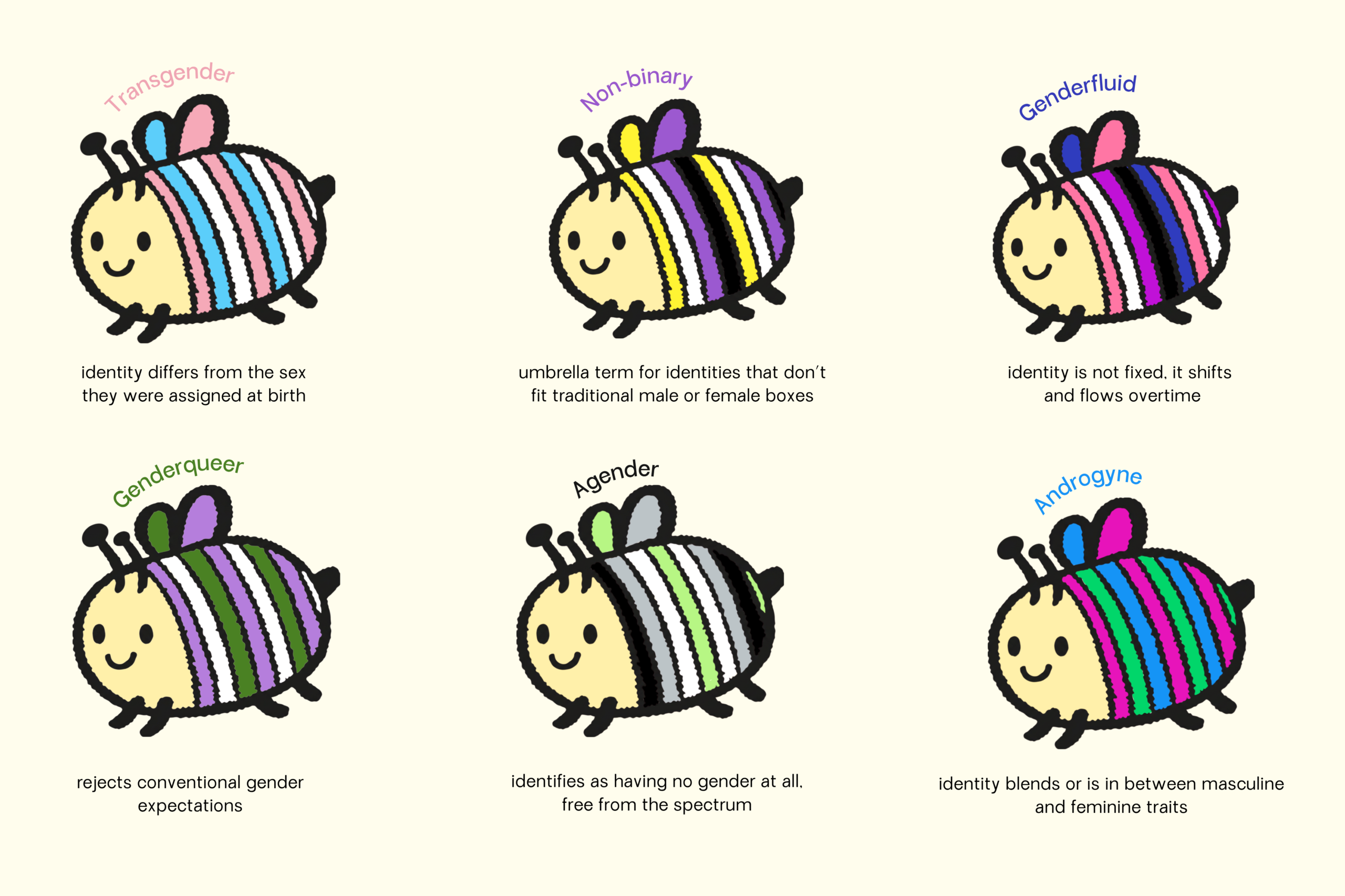
Gender Identity is your innermost concept of self. It’s how you see yourself when you look in the mirror, it’s how you feel and connect with your being. Think of it as the internal factor in SOGIESC. Gender Expression is how you want to appear to the world—the way you dress, your haircut, your actions. It’s generally the factor that decides whether you have more (or a balance of both) masculine or feminine expressions.
Unlike sexual orientation language that can be found in earlier pages, gender identity and expression terminologies mostly appeared in the 1900s. Transgender, for one, has roots from the word ‘transvestite,’ which German sexologist Dr. Magnus Hirschfeld coined in his book “Die Transvestitenin” to illustrate the concept of not identifying with one’s assigned gender. The word transgender itself only came into being in the 1960s. The National Geographic said that historians traced the earliest use of the term to a 1965 psychology textbook, popularized by transfeminine activists like Virginia Prince, who argued that sex and gender are separate entities. The term further became utilized by the 2000s in efforts to embrace a wider LGBTQIA+ movement and promote inclusivity across sex and gender.
Identities such as genderfluid, non-binary, and genderqueer were welcomed alongside the emergence of queer zines and activism in the 1990s. The concept of genderfluidity was described as “the ability to freely and knowingly become one of many of a limitless number of genders, for any length of time, at any rate of change” in “Gender Outlaw: On Men, Women and the Rest of Us,” a book by Kate Bornstein. A study called “Beyond Binary: Genderqueer as Critical Gender Kind” by Robin Dembroff from Yale University outlined that genderqueer was first coined in by trans activist Riki Wilchins
“in an attempt to describe those who were both queer with respect to their sexuality and ‘the kind of gendertrash society rejected’ with respect to their gender intelligibility in public spaces.”
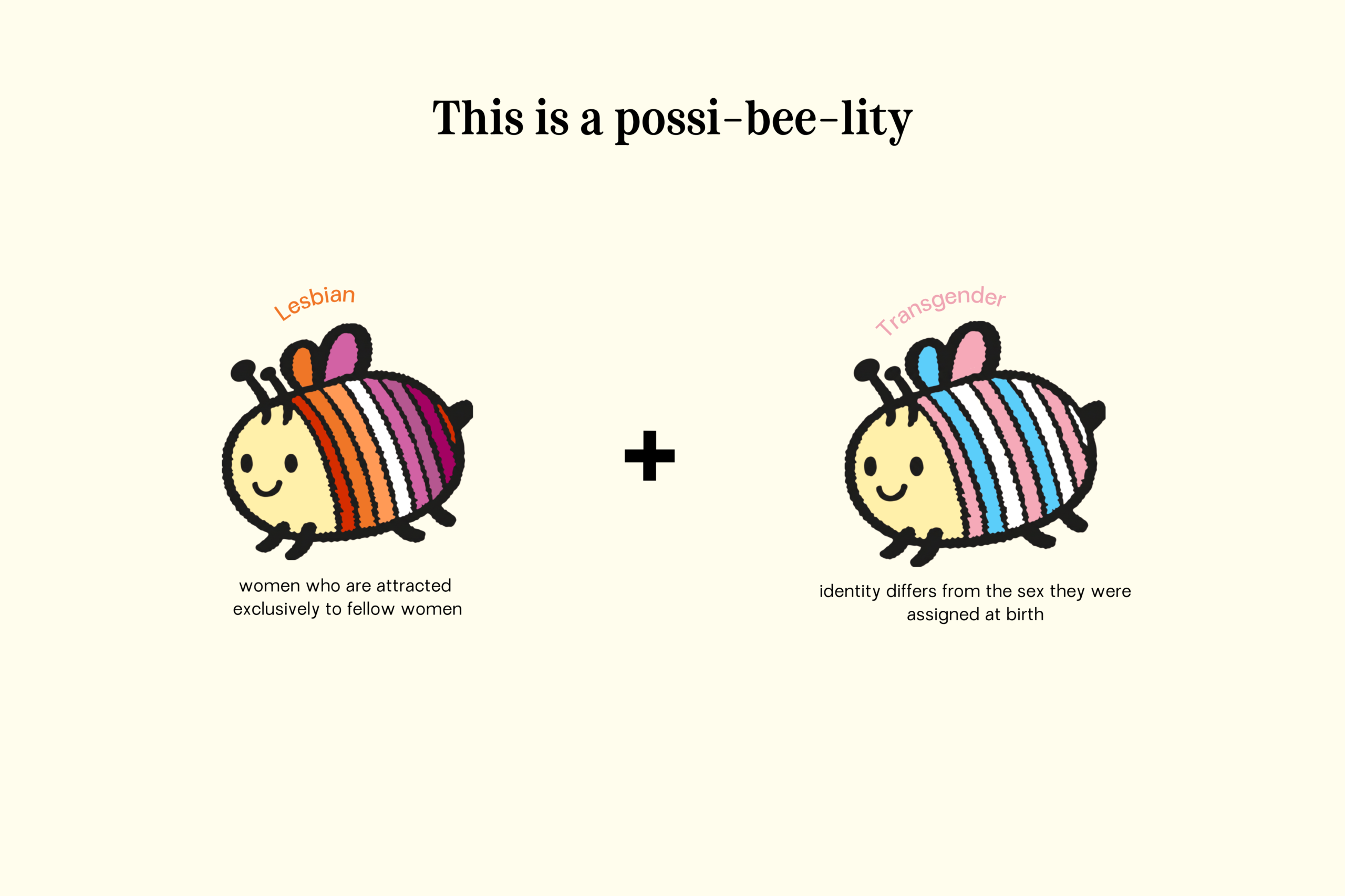
A person who was assigned male at birth may identify as a transwoman and be attracted to women. Transitioning to the opposite gender does not affect your sexual orientation. Your feelings of attraction is seperate from your sense of self or identity. 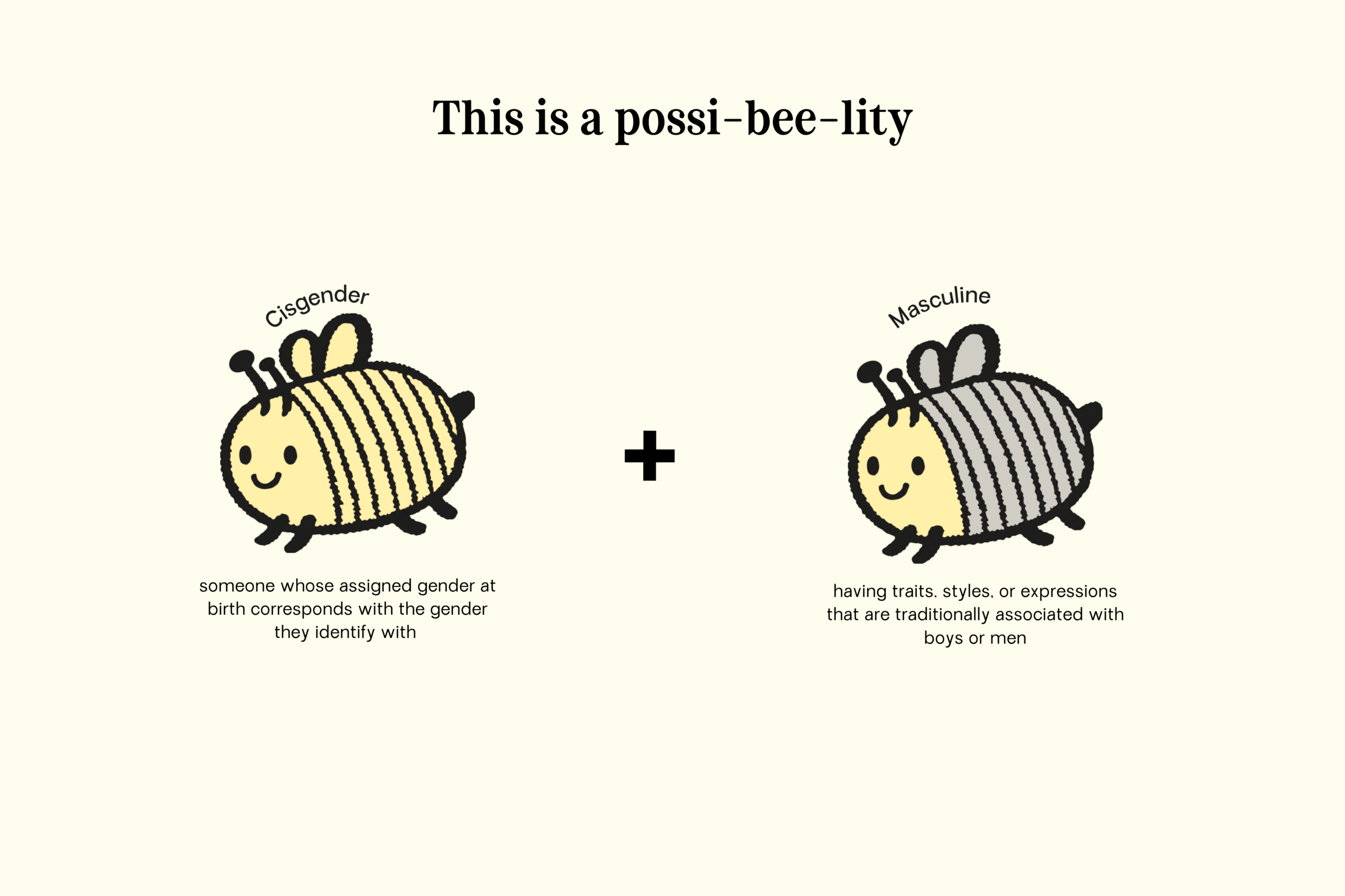
A cisgender woman may have a masculine gender expression. She can dress up in boy clothes or have styles or behaviors typically associated with men and be exclusively attracted to men. Again, your attraction does not dictate how you see or express yourself.
Cisgender – from “cis” meaning “same,” someone whose assigned sex at birth corresponds with the gender they identify with
Transgender – someone whose assigned sex at birth does not correspond with the gender they identify with
Nonbinary – an umbrella term for identities that don’t fit traditional male or female boxes
Genderfluid – someone whose identity is not fixed, and can shift and flow overtime
Genderqueer – someone who rejects conventional gender expectations that are often rooted in social or political gender stereotypes
Agender – having no experience or concept of gender
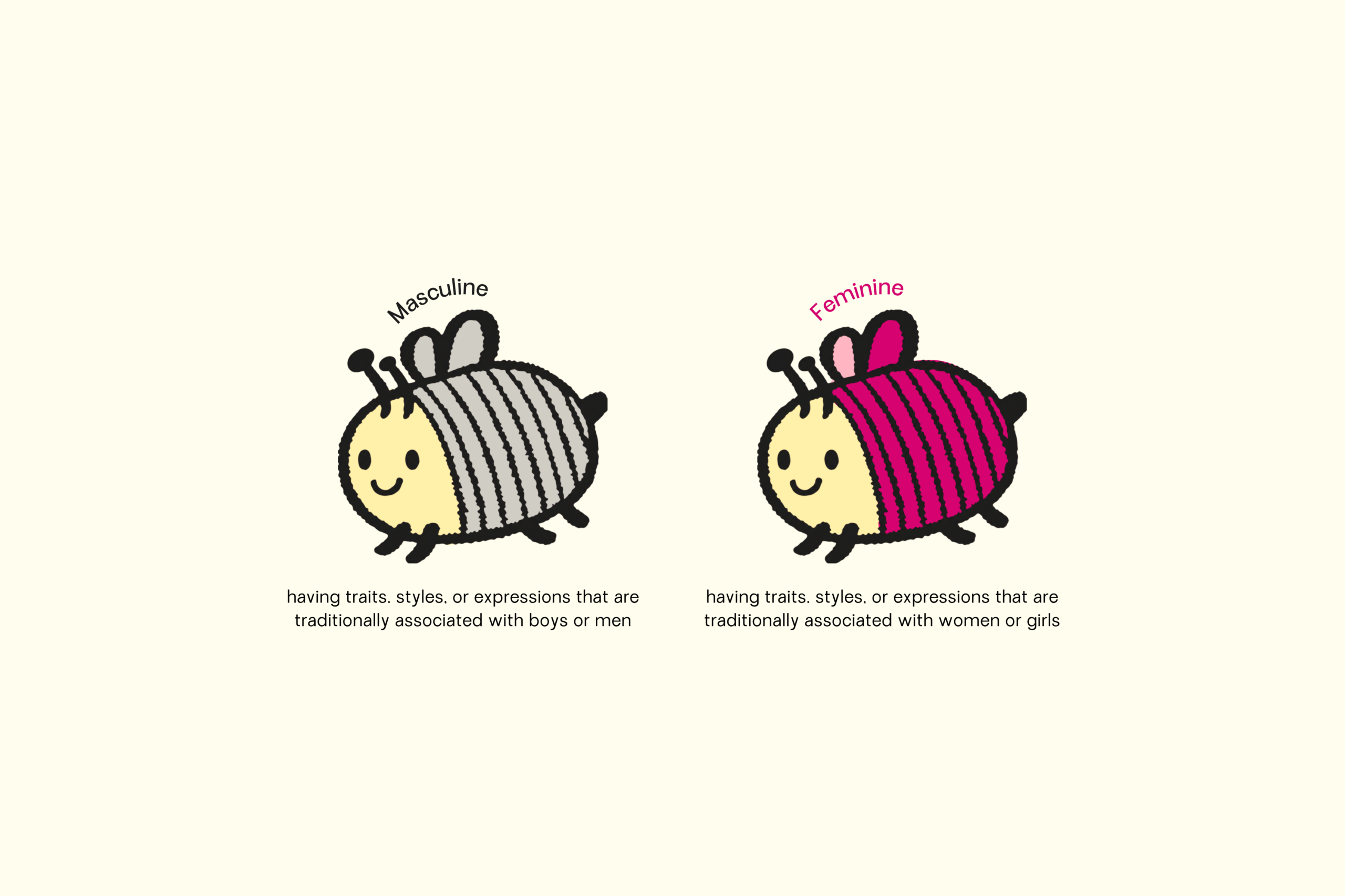
Gender expressions were originally limited to two: masculine or feminine. Masculine pertains to having traits. styles, or expressions that are traditionally associated with boys or men, while feminine pertains to having traits, styles, or expressions that are traditionally associated with girls or women. Androgynous, which stems from the Greek word androgynos (andr- meaning “man” and gynē meaning “woman”), pertains to having a mix of masculine and feminine traits, or presenting in a way that is not distinctly masculine or feminine. Neutral means not having distinct gender markers, while gender nonconforming or GNC pertains to expressing gender outside of traditional societal norms and rejecting stereotypes. It is also important to know that gender expressions considers a person’s culture. In some cultures, there are traditional garments for men that resemble dresses or skirts, which means there wearing of that garment does not translate to them having a feminine gender expression.
Specific terminologies also exist for further clarity. Certain examples used by lesbians or queer women include, but are not limited to:
Butch – often describes a queer woman who exhibits a masculine identity or gender presentation
Femme – often describes a queer person who exhibits a feminine identity or gender presentation. Used by both gay men and lesbians. There’s also hyperfemme, an exaggerated expression of femininity.
Masc – a newer, broader term frequently used to describe a masculine-leaning gender expression, aesthetic, or style. There’s also soft masc, a more subtle display of masculine traits, often with softer, more traditionally feminine traits, aesthetics, or emotional vulnerability.
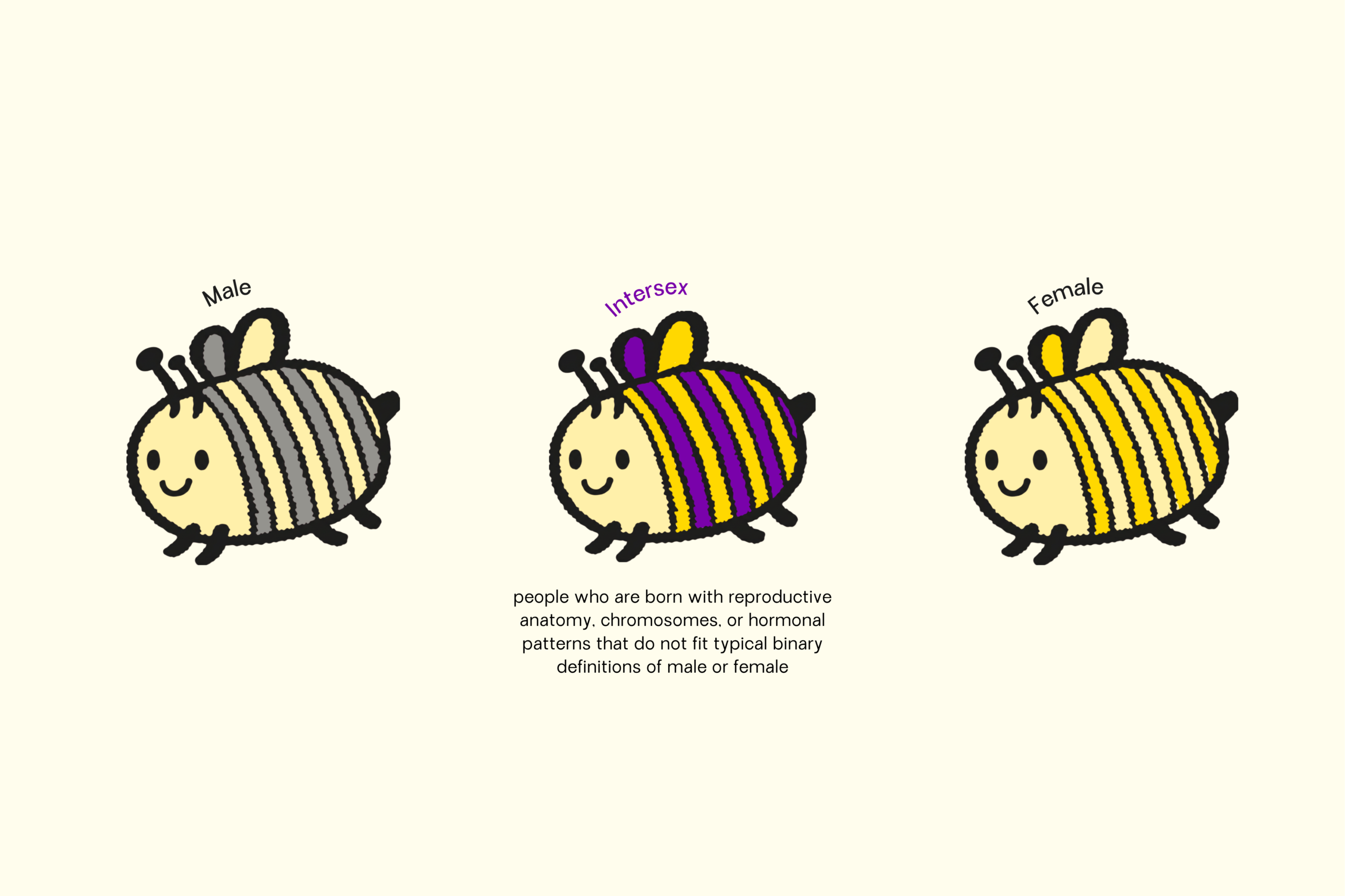
S plus C stands for Sex Characteristics
Sex Characteristics were added to the SOGIESC framework later, together with the letter E/expression. Initially, the Yogyakarta Principles established SOGI in 2006, with ESC included in 2017 to cover the aspects of how individuals express their gender and an individual’s physical, hormonal, and genetic features. SC was especially considered to protect intersex individuals. who are often stripped of their right to choose which gender they would rather live with.
Intersex refers to people who are born with reproductive anatomy, chromosomes, or hormonal patterns that do not fit typical binary definitions of male or female. Possibilities include atypical genitalia, formerly called ambiguous genitalia, a rare condition in which “an infant’s genitals don’t appear to be clearly male or female.” In most cases, when an intersex child is born, parents and/or doctors rush to choose a “dominant” binary sex and perform irreversible, non-consensual surgeries in fear of the unknown. Sometimes, a person could also be born appearing female but internally have male physical characteristics, leading to the same course of action. SC was integrated into the SOGIE framework to combat this, recognizing sex characteristics as a distinct right and preserving an individual’s freedom to discover and choose their own identity as they grow.
It’s a rather rare subject that people find hard to grapple with, but intersex people exist and deserve protection! In an episode of Ang Walang Kwentang Podcast, trans and queer rights activist Thysz Estrada revealed that in the Philippines, we have what is called the “Cagandahan Bill,” named after Jeff Cagandahan, the first intersex Filipino who experienced a legal gender marker change. The bill seeks to provide intersex, as well as transgender Filipinos, with the choice to legally change their gender markers as a means of expressing their chosen gender. “It’s never about what is in between your legs,” Estrada emphasized. “Nasa sa iyo ‘yun, at walang dapat nagdidikta sayo na dapat ito ang gender mo. (The choice is yours, and no one should and can dictate who or what you are)”
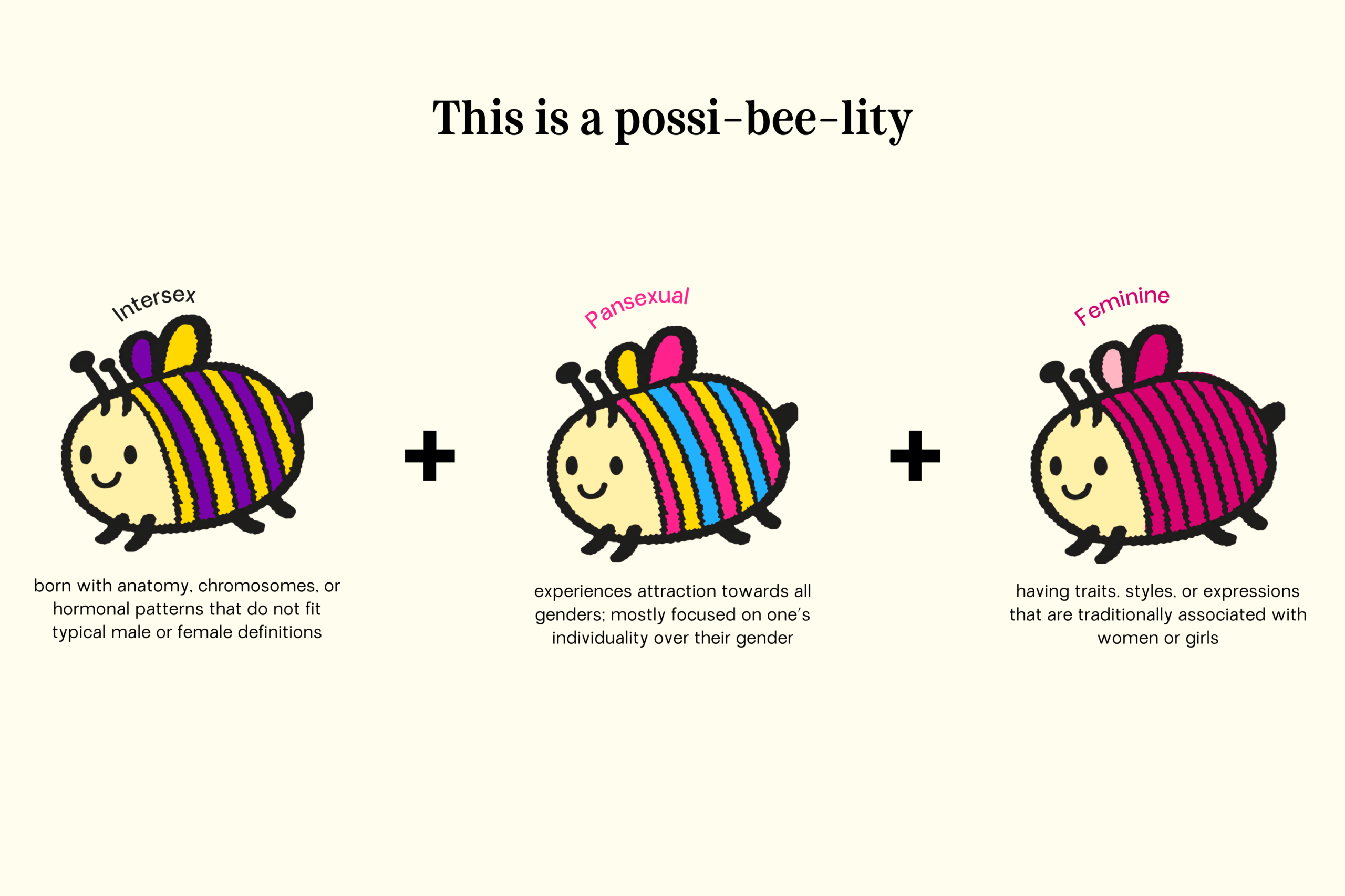
There is no single formula!
While SOGIESC involves definitions, concepts, and terminologies, there isn’t a strict way to go about it. We often hear people say that there are too many letters in the LGBTQIA+ or that our generation loves to “label everything,” but these labels exist simply because there remains a lack of understanding. Many people found themselves by reading into these labels, and others embraced themselves by not identifying with any of these labels. We are all different, and we are all affected by the universal view of SOGIESC.
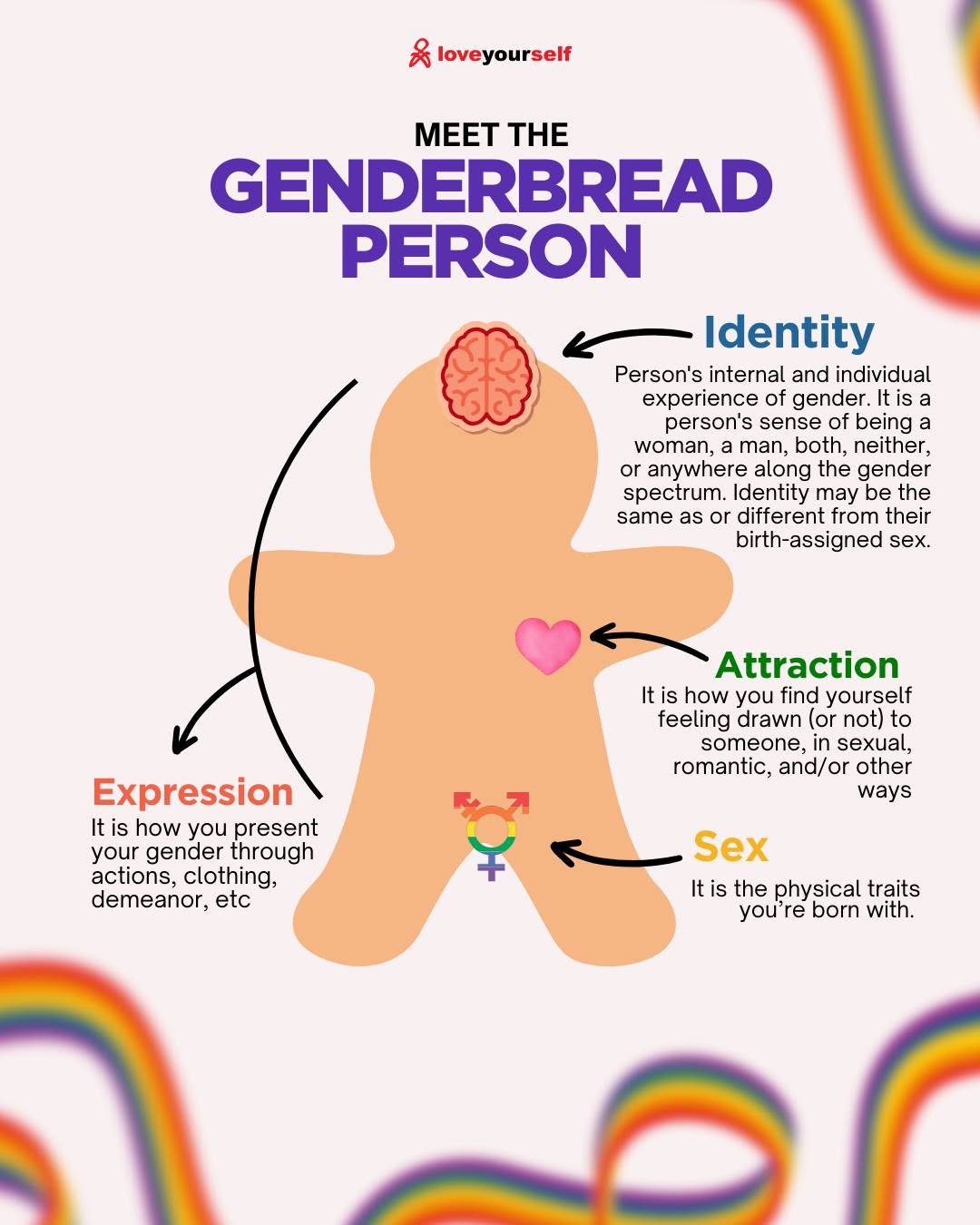
Come to think of it, SOGIESC shouldn’t be complicated. It all comes down to a simple truth: the only label that matters is the one a person chooses for themselves. You’re free to choose what suits you! You’re free to choose what feels right! Respect these labels, or honor one’s choice to have none at all. It actually isn’t complex if you just let people be.
Hate is heavy. Love is light. Empathy is easy 🌈
Sources
From LGBT to LGBTQIA+: The evolving recognition of identity – https://www.nationalgeographic.com/history/article/from-lgbt-to-lgbtqia-the-evolving-recognition-of-identity
University of Santa Barbara, Resource Center for Sexual and Gender Diversity – https://rcsgd.sa.ucsb.edu/resources/lgbtqia-informational-resources/lesbiansapphic
Sexual Orientation, Gender Identity, Gender Expression, and Sex Characteristics: A Primer – https://rainbowresearchhub.up.edu.ph/resources/sexual-orientation-gender-identity-gender-expression-and-sex-characteristics-a-primer/
The invention of heterosexuality – https://www.bbc.com/future/article/20170315-the-invention-of-heterosexuality
Understanding sexual orientation and homosexuality – https://www.apa.org/topics/lgbtq/orientation
Beyond Binary: Genderqueer as Critical Gender Kind – https://philsci-archive.pitt.edu/16317/1/Beyond%20Binary%20Final.pdf
National Pansexual Pride Day – https://seattlepride.org/news/national-pansexual-pride-day
LGBTQIA+ History Month: The History of Asexuality – https://harmless.org.uk/lgbtqia-history-month-the-history-of-asexuality/
Nonbinary History and Definition – https://pointfoundation.org/community/blog/resources/nonbinary-definition-history
Making Queer History – https://www.makingqueerhistory.com/articles/2024/1/25/emma-trosse
SOGIE 101 with Thysz Estrada – Ang Walang Kwentang Podcast
LGBTQIA+Wiki – https://lgbtqia.fandom.com/wiki/LGBTQIA%2B_Wiki