
Strength in Strangers: Eala Nolasco on founding ‘Dykes Who Deadlift’
Images courtesy of Eala Nolasco and Dykes Who Deadlift
“I’ve always been, in the way I believed no one can dictate what a woman’s body and life path ought to be as early as age three, a raging dyke.”
Eala Nolasco makes this statement in the midst of a conversation on Dykes Who Deadlift or DWD, a cohort for queer women and sapphics that they founded on the premise that no universal rulebook could ever measure one’s strength. The line stems from having lived years in a body that used to be told, in a hundred small ways, that it wasn’t built for any of this. From the kid who nobody wanted on their team in Physical Education class to a young adult who forged their own fitness path, Eala established DWD as a refusal to conform to the very norms that teach our community (women, queer women, and gender non-conforming people) to fear weights and the muscles that come with lifting them.
There is blatant irony in how society conditions assigned female at birth (AFAB) individuals to believe that pursuits that require power are made for cis-men, while our bodies are reserved for movements that train us to be submissive, masked as gentle or nurturing. This downplaying forces us to take on weight we never wanted to, a certain heaviness that only eases up when we get to see how others have worked towards putting it all down. Eala’s hope is for Dykes Who Deadlift to hold space for this healing. “In DWD, we don’t just learn to deadlift. We shared lived realities and intersectionalities; we create memories and laughs only we know the punchline to, and we build confidence together that we get to bring outside with us even after sessions have ended.”
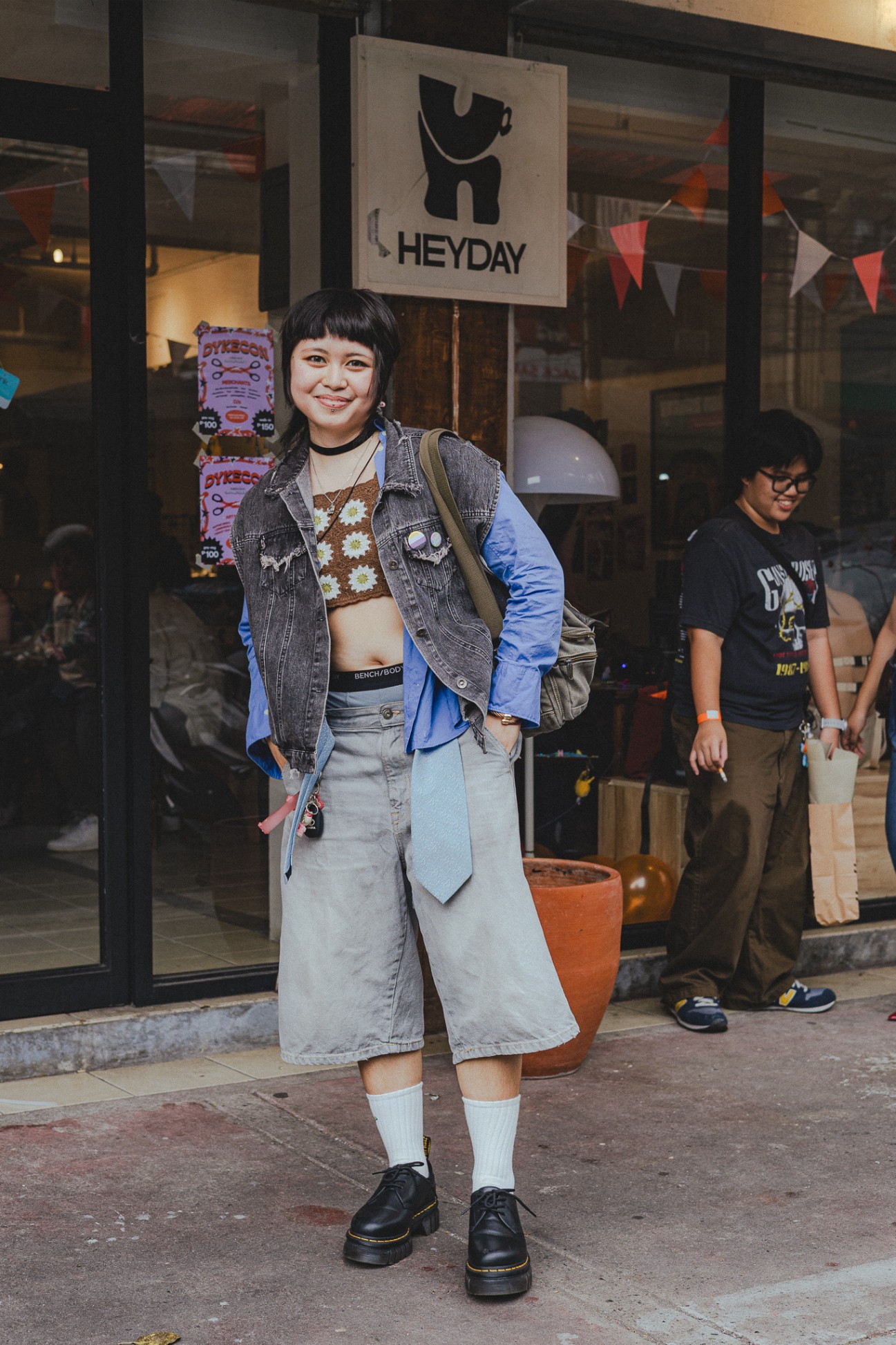
No strength in stereotypes
There is a pattern I find in queer stories. We create the spaces and become the people we needed as children. For Eala, it started when they were offered a verdict in elementary: forget about sports, focus on studying—one that aligns with all the propaganda about bodies and capabilities. And for a kid, words like this often stick. So Eala believed that there is no place for them in sports until college. “Looking back, maybe I just wasn’t meant for balls of any kind,” they jested.
The succeeding years gave them a second unsolicited take about their body, this time about how it looked rather than what it could do. At fifteen, a designer measured their waist, found it at 27 inches, and told them to get it under 23 by the time they turned sixteen. This led to an unhealthy relationship with food, chasing visible collarbones and a wider thigh gap through YouTube ab and cardio workouts. Different spaces, different systems, but both the classroom and the fitting room brainwashed Eala that a body is subject to society’s perception and not one’s decisions.
Isolation during the pandemic put both cycles to a stop, though not gently. Eala fell into a depression severe enough that it spiraled into something life-threatening, but thank the gay gods for therapy and writing. “Spoken word saved me even before I found therapy. It was all I had when I had no physical place to safely call mine. It helped me build spaces to be. And now I have a place of my own; I find the spaces I capture and create with my poetry are no longer a reaction to the limitations of my place. I find I write to celebrate what is and make sense of what I couldn’t before.” Somewhere in that slow return, Eala realized that their relationship with their body and exercise needed to change, a decision that ended up defining the trajectory of the near future. “And then it happened. I had 2 sets of weights at home and just picked them up. One 2lbs pair and a 3lbs pair. They are, in retrospect, very light, but at that time lifting those made me feel unstoppable.”
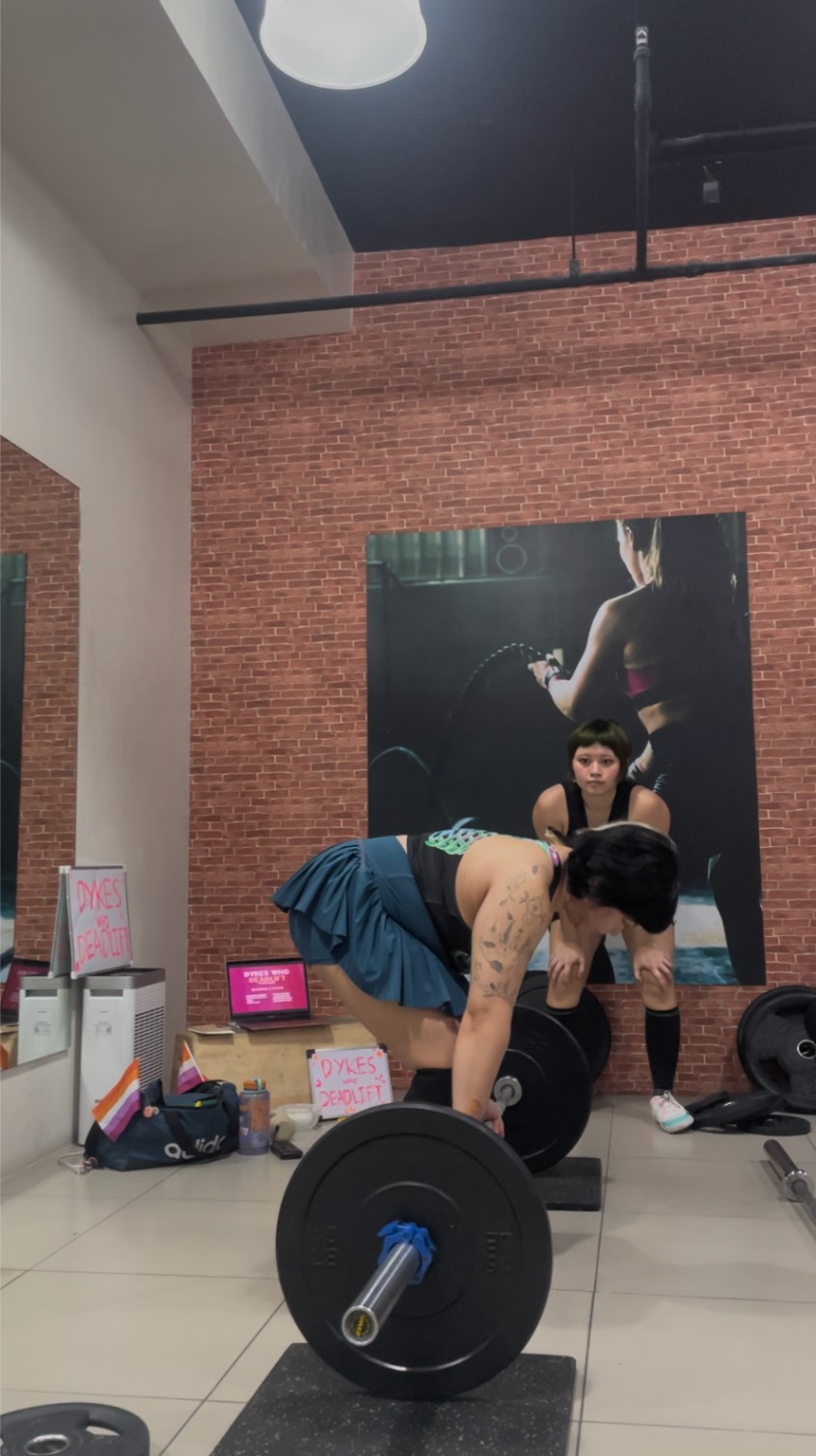
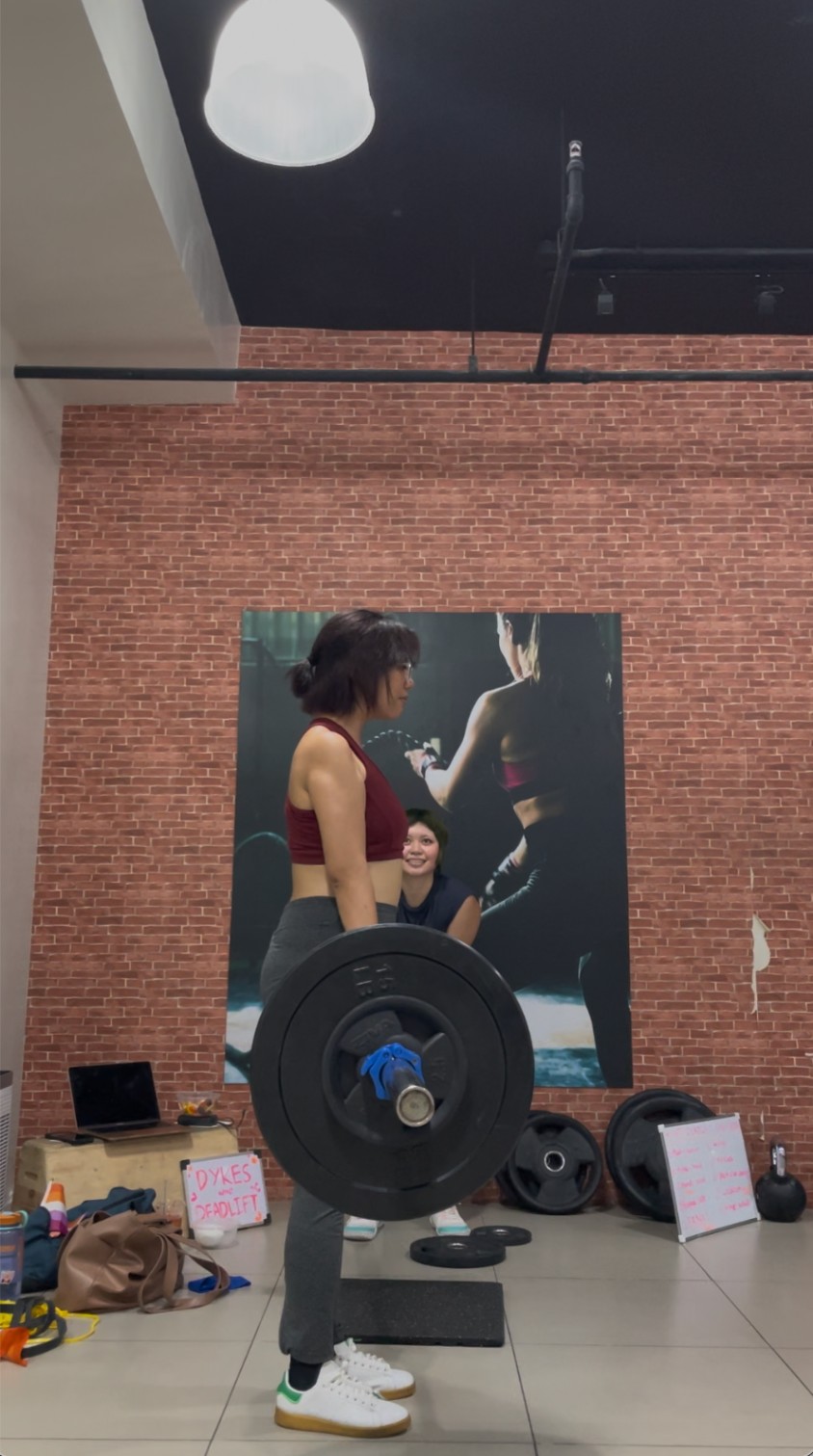
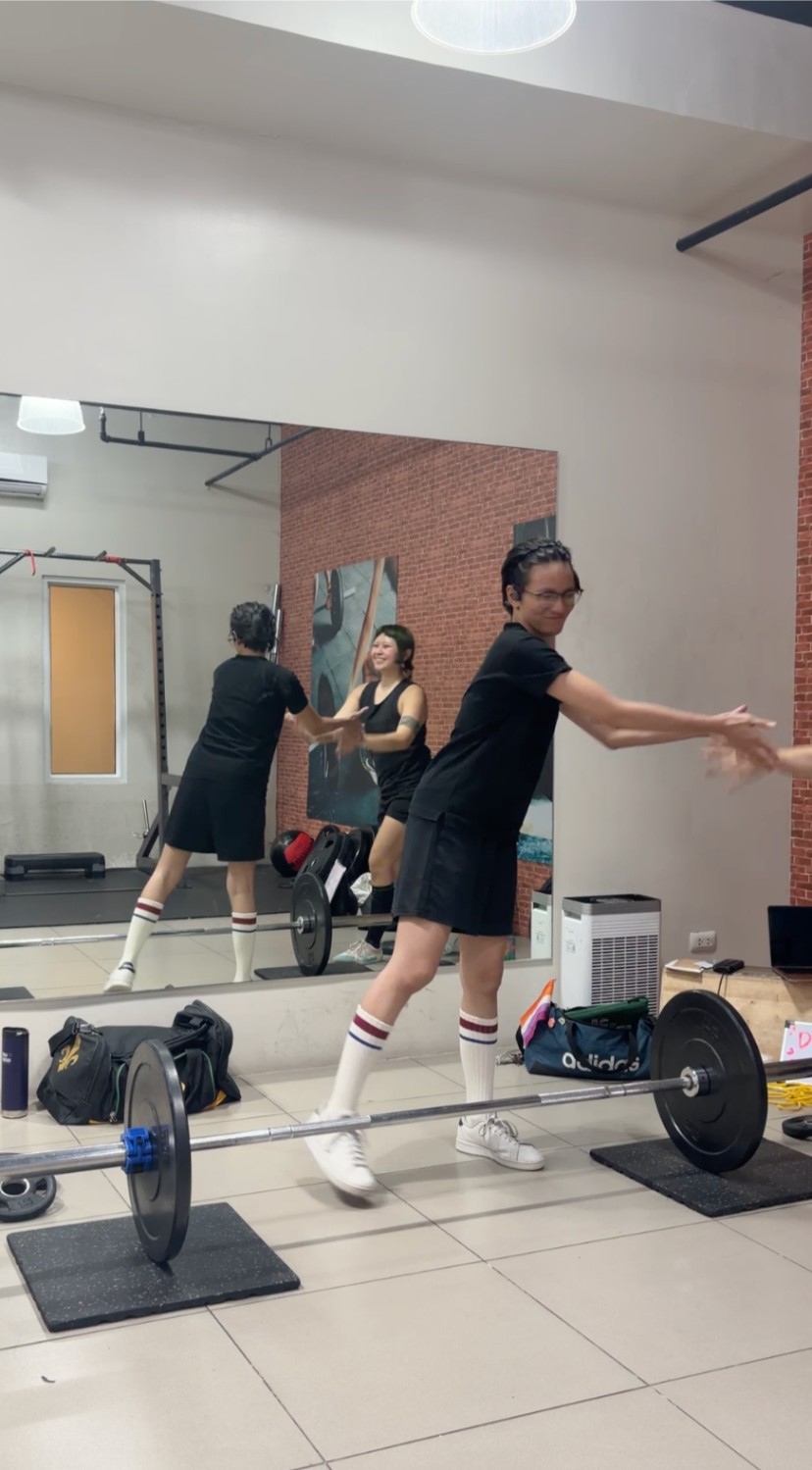
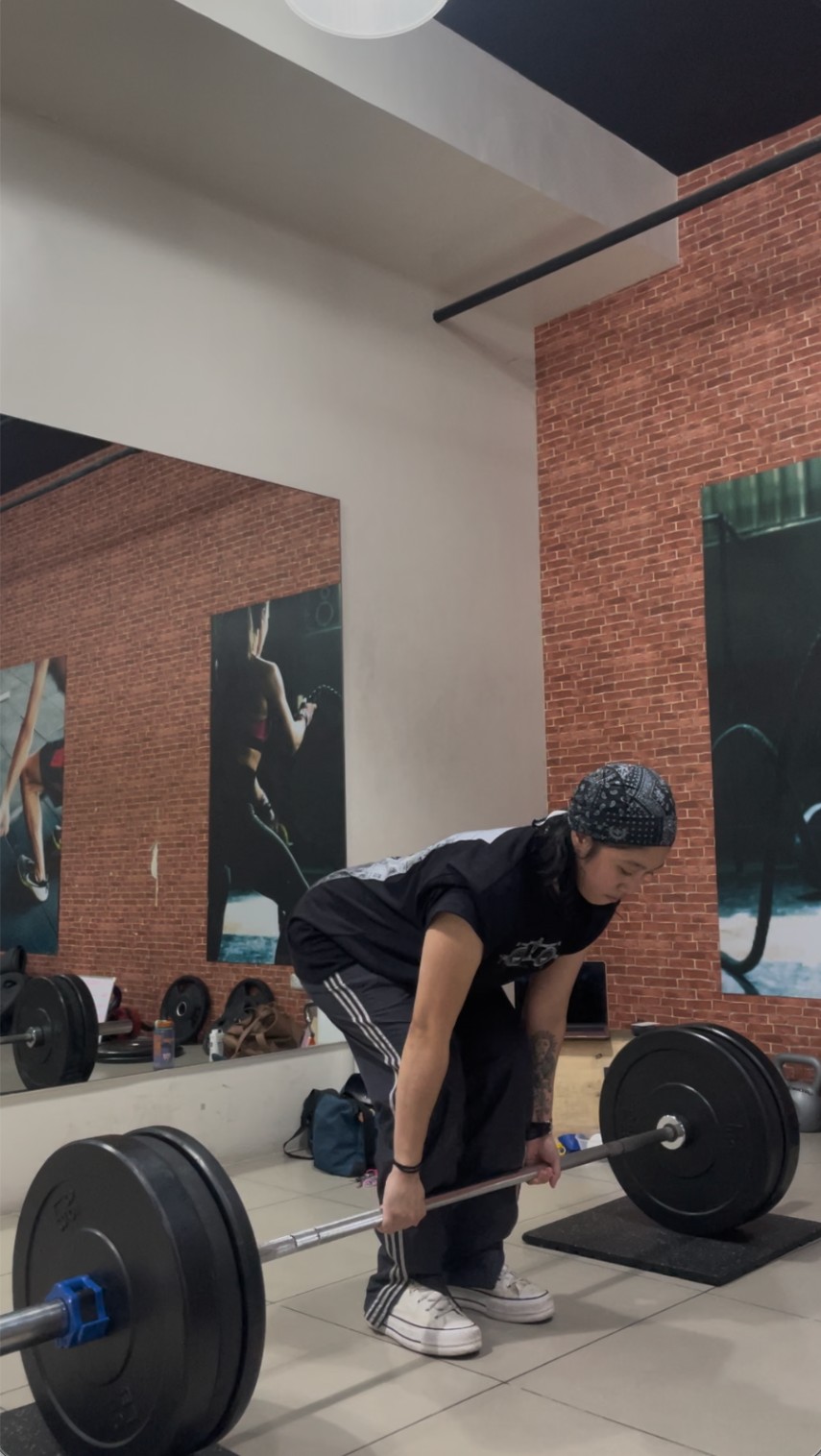
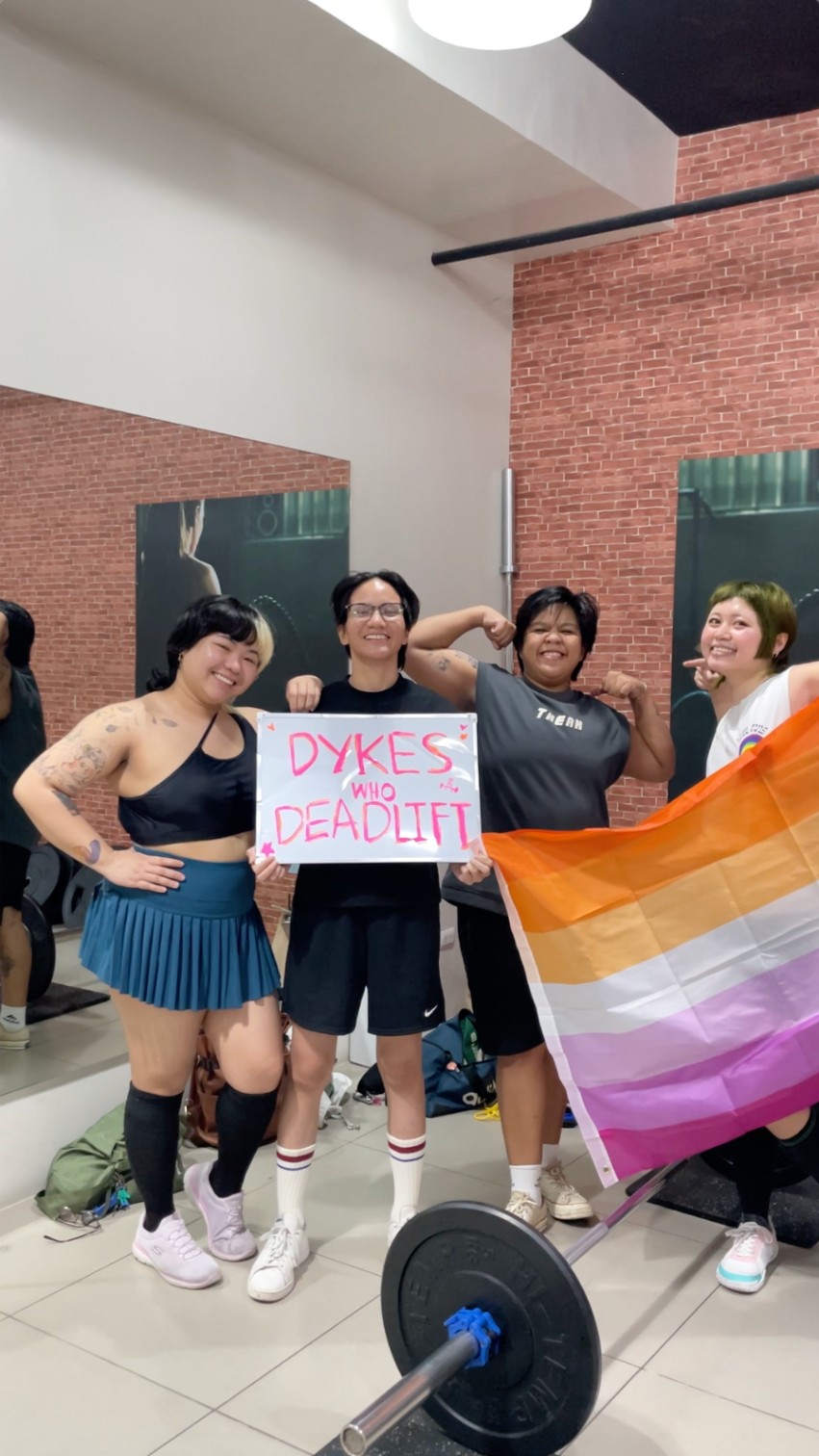
Images from the first and second cohort of Dykes Who Deadlift
Small steps led to an even clearer path. They found strength-training communities online for support. They extended the same grace they gave themself towards eating habits, one that they gratefully attach to Jo Sebastian’s “you always deserve to eat” videos. When the world slowly opened up, they also tried Obstacle Course Racing. It was love at first go. “I felt so damn capable! There were obstacles I could do, others I couldn’t, and the community made me feel like I could, soon enough, conquer them too. Suddenly I’m competing, suddenly I’m gunning and landing podiums, suddenly I’m an athlete too. No one, myself included, saw that coming.” Fittingly, it was also through OCR that they figured out they liked women. “I had signs growing up, but I had a lot of internalized homophobia to overcome. All that crumbled when I saw this girl doing push-ups and I was completely at a loss for words. I don’t know if it’s her per se that I liked, or her strength, or maybe both, but one thing’s certain—I was gay as hell and drawn to strength.”
One day, a former colleague asked Eala to coach him. Impostor syndrome kicked in at first, but they eventually said yes after gaining certification through the International Sports Sciences Association. Even without all the tools to do it properly, this led to saying goodbye to a 9-to-5 research management post. Not the plan, exactly, but by then Eala knew the work mattered too much to give it anything less than everything.
For one cannot find strength when the spaces they breathe in force them to hold their breath. And no person could ever climb up if the foundation that holds the ropes is the same thing weighing them down. Eala learned that the hard way and hopes others wouldn’t have to. “You can be smart AND do sports. It’s not either or. You can genuinely enjoy your textbooks and readings AND be in love with movement and good at sports. You CAN!!! Don’t forget that you’re good at anything you put your heart to. You’re a champion when you do.”
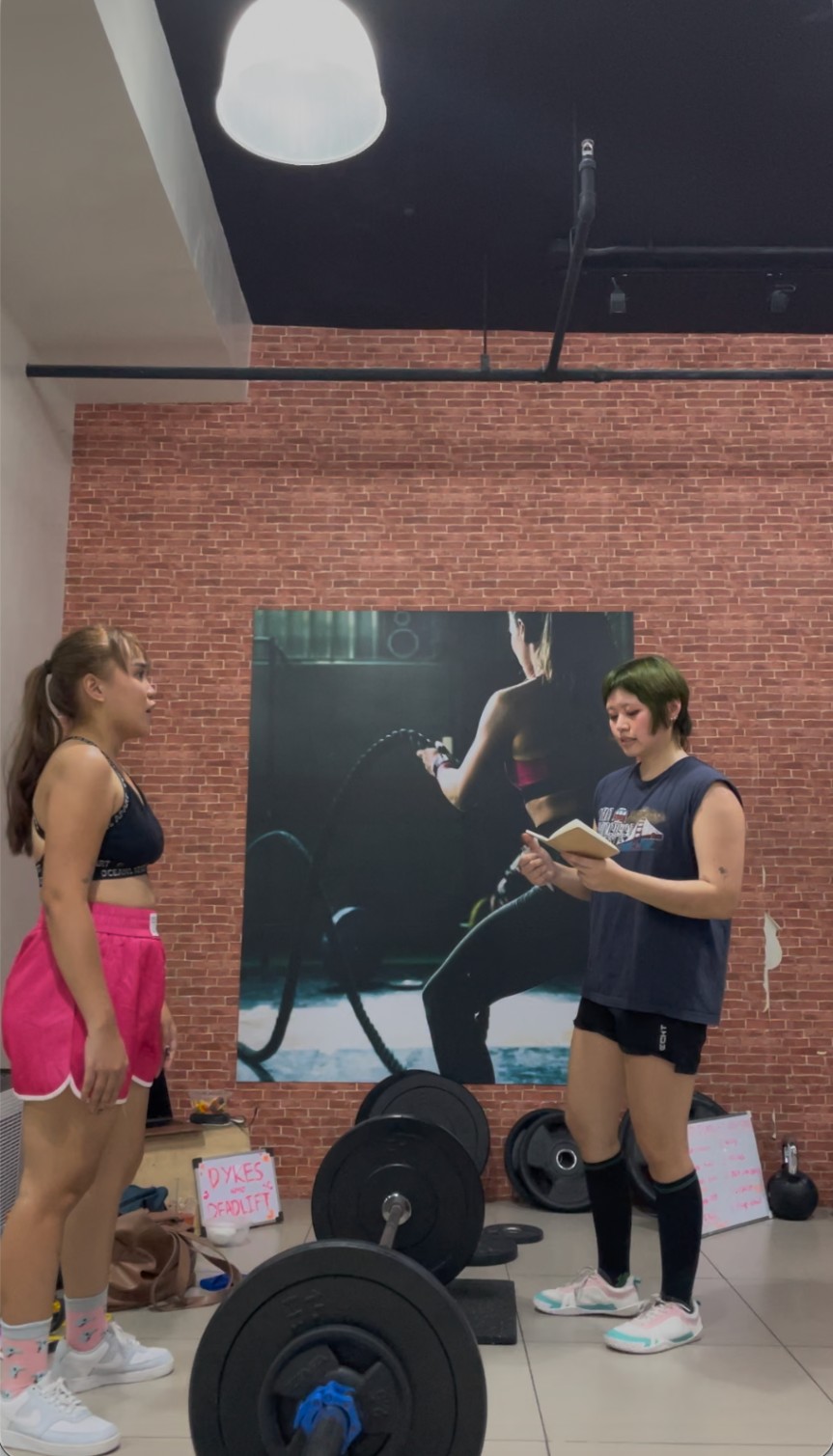
The politics of power
Movement, as Eala affirms, is as political as identity. The same patriarchy that dictates that marriage is all that a woman is fit for is the same one that deliberately reserves weight rooms for cis men. It is the same master manipulator that has taught people to see SOGIESC as something made up rather than a part of humanity, justifying any foul action toward anyone who falls outside of the binary. “Recognizing that the male gaze exists and that it perpetuates heteronormativity as the gold standard, and unlearning to navigate life inextricable from the male gaze was by far the heaviest burden I struggled to lift because I didn’t see what I was trying to lift in the first place,” Eala shares.
Working out their own relationship to gender and power took a parallel, equally long road. Eala stitches this narration so vividly:
“(The male gaze) has formed into my second skin, glued stubbornly to my flesh, so ripping it off left me confused. Why was I even ripping my own “skin,” only to realize it was never mine in the first place. The second heaviest struggle was when I realized I’m nonbinary; for a while I couldn’t call myself a lesbian, thinking the fact I am nonbinary excludes me from the lesbian experience. So I called myself pansexual, because in theory it was inclusive of all genders including mine, but that never felt as right as calling myself a lesbian. And a third is to think my being a lesbian becomes “real” when I date a woman—my being a lesbian isn’t just about who I’m attracted to, it’s so much more political. Which is why when I come into DWD, I’m a dyke and coach first. I’m not there to be a lesbian—if that makes sense. I’m there as a dyke coach bringing fellow dykes together who want to learn how to deadlift properly.
When I learned the term nonbinary, the second skin just peeled right off— my limbs have grown too much to be contained by it. I started using they/them pronouns, went for the big hair chop, and started wearing more polos. It was a lot of experimentation in how I presented to feel comfortable with being nonbinary, and a lot of questioning my right to identify a lesbian when lesbian—I thought then—meant women loving women, solely. But lesbian history tells us otherwise: that we’ve had gender non-conforming lesbians since life itself existed, and that actually, I belong here too.
While I feel most myself now, a nonbinary lesbian confident in how I present, which is neither clear-cut masc nor clear-cut femme, I have struggled with that bit of presentation too. There’s this irrational fear that I’m not my type’s (usually masc-presenting or androgynous) type. Because mascs like femmes, usually. But I’ve dealt with the male gaze for too long to box myself again. I’m now just happy to be me, whether or not I fit my type’s type; I believe, be it in coaching or in life, the people ready for me will find me.”
This reclamation of power translates into Dykes Who Deadlift in more ways than one. Past the absence of the male gaze and the need to prove one’s queerness, DWD’s acknowledgement of love in all its forms is practiced in the littlest of things. Sign-ups ask for preferred name and pronouns upfront, and legal names only where required for emergencies. Consent is secured in the kindest way possible, and writing is encouraged to share reflections and realizations after every session. Here, the category doesn’t matter in the way competitive sport insists it should. What matters is that strength gets defined by the people building it for themselves and together.
In its most basic form, the reassuring part in all of this is that Eala is a dyke and they worked their way through wherever they are now. Dykes deserve to hear a success story like that to know it can happen for them too.
“Putting ‘dykes’ and ‘deadlift’ in one concept does two things: it reclaims what was once a slur and reclaims strength, through deadlifting, as something we are capable of and we do on our own terms—and do together” Eala explains. A dyke deadlifting alone in their own gym is already a political act. A room full of dykes, most of them strangers, learning to deadlift together and exchanging form cues, gummies, playlist requests, and the specific relief of not having to explain themselves, is something more than that. It’s a space that persists in the people who’ve been through it, one they get to carry back out into a world that could use a little more light.
Trained to Coach
Dykes Who Deadlift is a culmination not of the experience of one person, but of every aspect tied to these experiences. How struggle is often a prerequisite to breakthrough, or how power is almost always synonymous with strength.
Ask Eala how they’d explain their job to a small child, and the answer is simple: they help people get stronger. “To a kid who doesn’t know me who’d ask why my hair is short and why it’s not long like a girl’s, (the answer is simple too). I’d say I’m Eala, and I am not a boy or a girl; I’m just me, and I love trying my best to be stronger than who I was yesterday, and I help people do that. I help people get stronger in body and mind.”
The training and inspiration to be the coach they never had as a child is owed not only to the spaces they created for themself, but to sapphic spaces they found. Eala cites The Sunny Club and Sapphic Society as the general orbit of community that further allowed them to see people as they are. Frequenting parties and striking up conversations were all that they needed to know that many dykes wanted in. Not just to learn to lift, but to learn to lift with people who understand.
It isn’t a class; it’s individualized coaching happening inside a shared space, one dyke and one set at a time. One participant shares, “Being surrounded by dykes and sapphics cheering each other on made strength feel less like something you chase alone, and more like something the room builds together.”
What Eala wishes for DWD from here on is more of exactly that, at a larger scale. To see a continuous rotation of new cohorts through the year and eventually a community lift where every past cohort can show up and train together. To see strangers turned fitness buddies, turned friends. Hopefully an intermediate track for founding members who’ve outgrown the beginner curriculum!
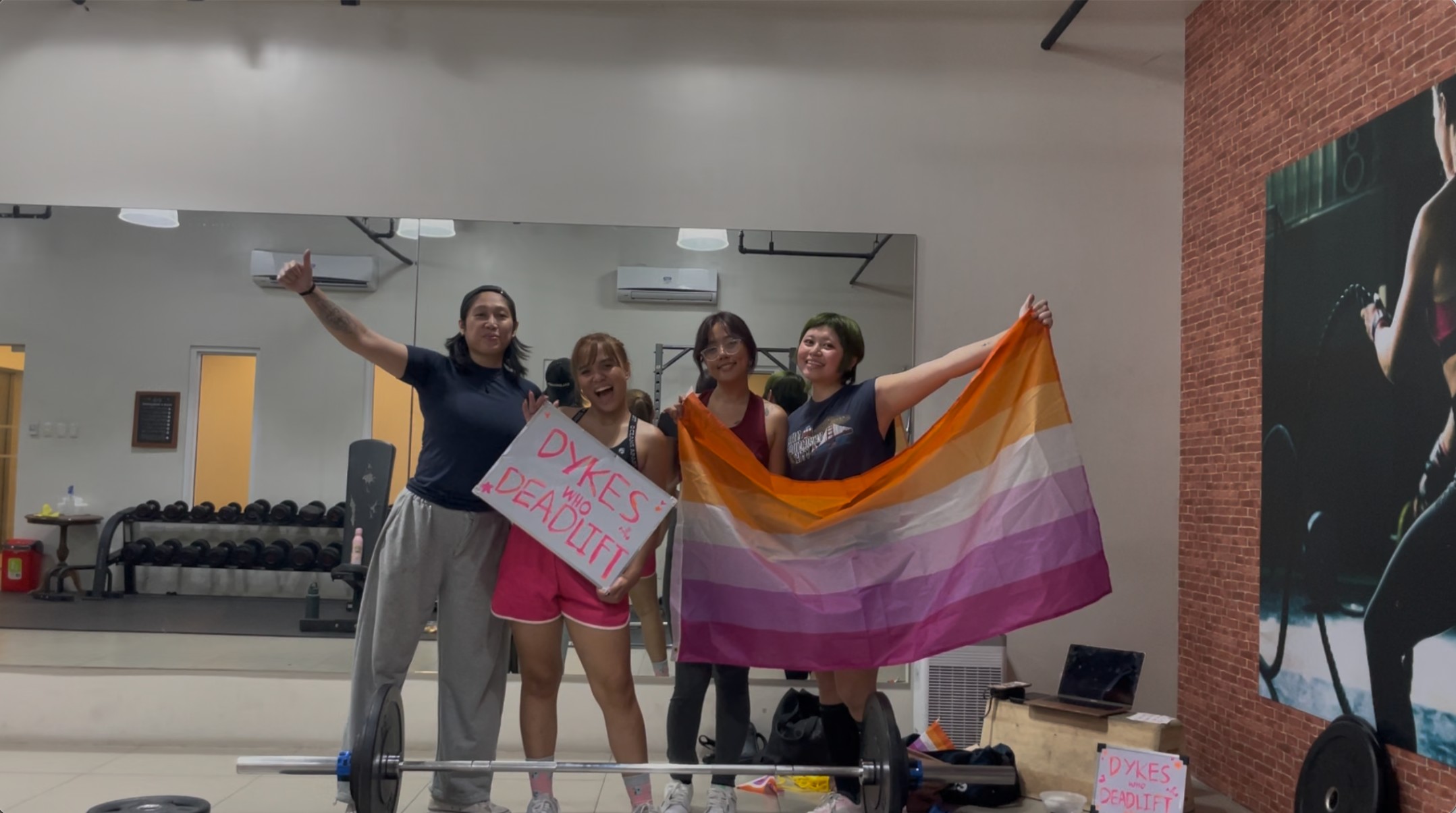
As with any queer project, the manifestation is centered on a physical space someday. Their own dyke-built, dyke-led, and dyke-centered gym, open to anyone from any cohort who wants to walk in and get stronger. But not by chasing sponsors or big-name collaborators to get there. If anything, Eala is holding out for queer-and lesbian-owned brands and gyms who already share the principles tied into DWD’s name. Most of the founding cohort did exactly that; they were strangers who trusted the promise of the lift before there was any proof of what could be raised.
*Allow Eala a personal manifestation here! They are a huge fan of Direk Sam Lee, who is also big on fitness. Direk Sam on DWD soon, maybe?*
It all circles back to the three-year-old who already knew that no one got to dictate what their body or their identity, albeit their life, was for. Dykes Who Deadlift is a hand closer to a trophy, arguably a victory in itself, to win what was never supposed to be an argument in the first place.
Our bodies are our business. To every dyke, lesbian, sapphic, or queer person who is still burdened otherwise, there is a space for you to put it all down. You probably heard this before, but that doesn’t make it any less true:
You were never meant to carry it all alone 🌈
P.S. Applications for Dykes Who Deadlift-October cohort are now open! Interested in future cohorts? Join the waitlist here or follow Eala‘s DWD updates via Instagram: @ealanolasco
About Sapphlight
Sapphlight is an article series by Type B featuring Filipino sapphics, lesbians, bi-girls, and gender non-conforming people. The SOGIESC of featured individuals are not subject to disclosure unless openly shared otherwise. Please read with respect.